Gjirokastër
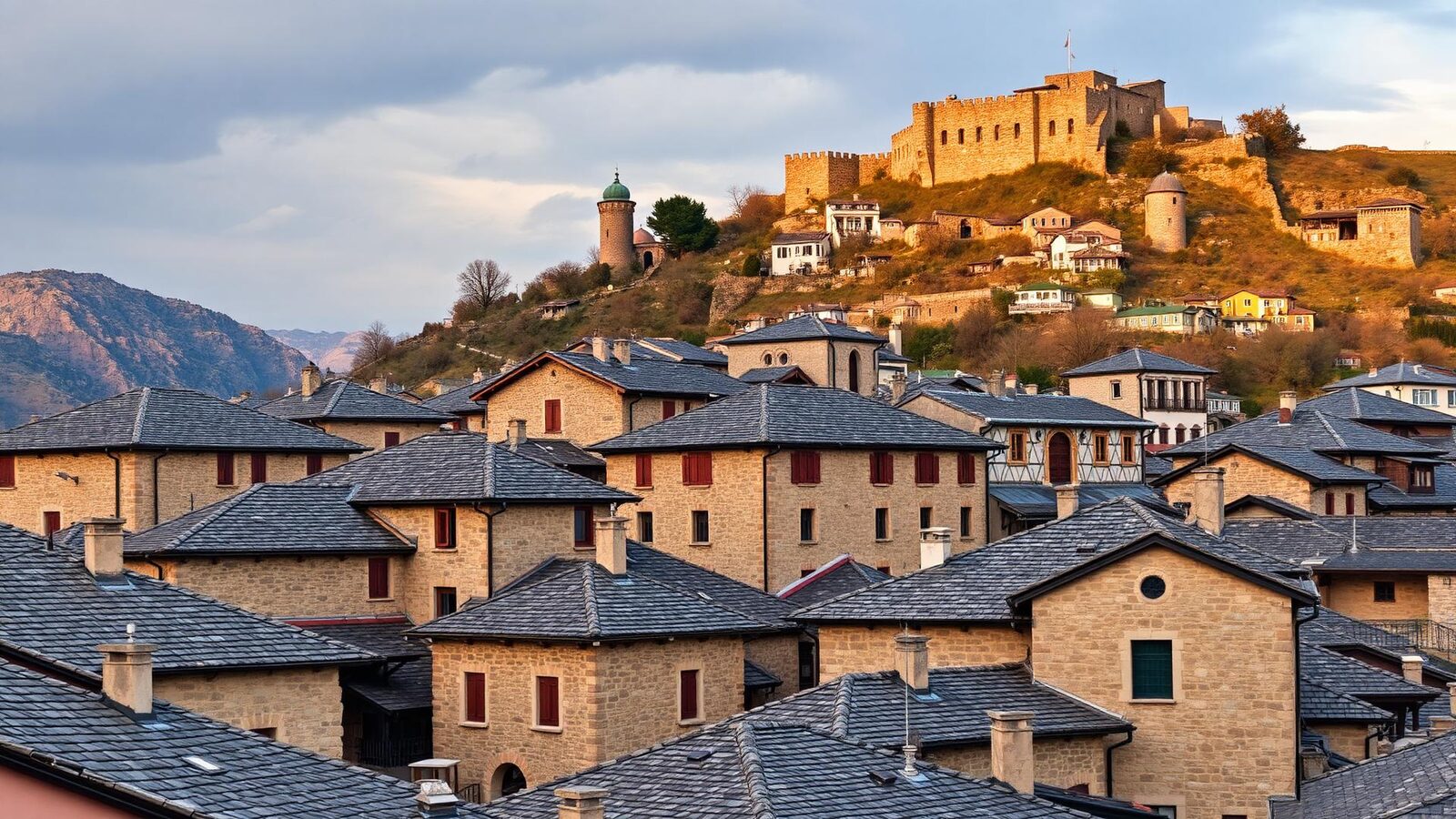
A UNESCO 'stone city' of slate-roofed Ottoman mansions and a vast hilltop castle — the atmospheric heart of southern Albania.
Highlights
Sights
A short itinerary
- Day 1· Arrive, check in, wander and get your bearings
· First look: Gjirokastër Castle - Day 2· Gjirokastër Castle
Good to know
- Combine with the Blue Eye spring nearby
- Buy local stone-carved crafts in the bazaar
- Handy stop on the way to Sarandë
Where to stay
The old town is beautiful and vertical. That single fact should decide where you book.
- The old bazaar quarter — Stone houses, cobbled lanes and the best atmosphere in the country. It is also steep enough that a rucksack beats a wheeled case, and cars mostly cannot reach the door.
- Just below the bazaar — A short walk up to everything, easier access and parking, and noticeably cheaper.
- The new town — Practical rather than pretty, and the easiest option if you are passing through for one night with an early start.
What to see
Gjirokastër packs an unusual amount into a small hillside: Ottoman domestic architecture, a vast castle and a Cold War bunker.
- The castle — One of the largest in the Balkans, with a weapons museum and a captured American aircraft parked on the terrace.
- The Cold War tunnel — A bunker complex under the castle hill, built for the local party leadership and opened to visitors only relatively recently.
- Zekate House — An eighteenth-century tower house with the best-preserved interior in the town.
- Skenduli House — Often shown by the owning family themselves, which makes it the more memorable of the two.
- The bazaar — Restored, and touristy in the middle of the day, but quiet and lovely early and late.
Getting there
- From Tirana — Around three hours on the main road south.
- From Sarandë — About an hour, which makes Gjirokastër the obvious stop between the coast and the interior.
- From Greece — The Kakavijë border crossing is roughly half an hour away, on the road to Ioannina.
- Getting around — Everything in the old town is on foot. The climb from the lower town to the castle is steady and long in summer heat.
How long to stay
- One day — Castle, tunnel, one house museum and the bazaar.
- Two days — Adds the second house museum and time to walk the lanes without a schedule.
- Longer — Usually as a base for the Drino valley or a stop on the way to Përmet.
Worth knowing before you go
- The stone lanes are steep and polished smooth. Proper shoes matter more here than anywhere else in Albania.
- The castle and the tunnel are cool even in August, which makes them the sensible middle-of-the-day choice.
- Gjirokastër and Berat are often compared. Berat is prettier from across the river, Gjirokastër is more interesting to walk through.
- Winter here is genuinely cold and some guesthouses close.
The Blue Eye, on the way to the coast
Syri i Kaltër sits near Muzinë, roughly between Gjirokastër and Sarandë, which makes it the obvious stop when you move from the stone towns down to the sea. It is a karst spring, the source of the Bistricë river, and nobody knows how deep it is: divers have reached fifty metres and found more below them.
Getting it right
- Timing is the whole thing. At opening, around seven, the platform is empty, there is mist on the water and the colour is extraordinary. At one in the afternoon in August it is a queue for a photograph. Come at opening or after four and it is a different place entirely.
- Watch which bus you board. Many Sarandë to Gjirokastër services now take the newer Kardhiq route and miss the spring completely. Ask the driver directly whether it stops at Syri i Kaltër before you get on.
- Driving, it is about half an hour from Sarandë and around an hour from Gjirokastër. The turn off the old road is signed but easy to miss, and mapping apps have been known to overshoot it.
- Bring cash. There is a small charge per person and another for the car, both cash only and both in small notes.
- It is a two kilometre walk in from the car park on a surfaced path, about twenty minutes, with electric scooters for hire at the entrance if you would rather not.
Swimming is banned. The signs are posted, the water sits at about ten degrees year round and the depth is unmeasured. Enforcement is inconsistent and people do get in, but the colour is really the point here, so it is worth going with looking rather than swimming in mind.
Do not build a day around it from Tirana. It is a two or three hour stop that belongs inside a journey, not a destination in itself.
Berat or Gjirokastër?
Albania has two UNESCO Ottoman towns and most itineraries only have room for one. They are genuinely different places rather than variations on a theme.
Berat is white and vertical in a gentler way, tiers of windowed houses stacked up both banks of a river, with a castle quarter that people still live in. It is closer to Tirana, easier on the legs, and the softer, prettier of the two.
Gjirokastër is grey stone and slate, steeper, and harder edged. The castle is enormous and stuffed with weaponry and Cold War remains rather than restored charm. It is also the better base for the south, sitting on the road down to the coast and near the Greek border.
If you are looping from Tirana and coming back, take Berat. If you are travelling north to south and ending on the Riviera, take Gjirokastër, and put the Blue Eye between them. With three nights spare, do both, because the contrast is the interesting part.
What a vertical stone town actually demands
Gjirokastër is beautiful and it is a proper climb, which is the part the photographs leave out.
- The cobbles are the real ones. Large, rounded, uneven stones on serious gradients, slippery when wet. Wear shoes with grip, and a rucksack beats a wheeled case here.
- Cars mostly cannot reach the door of an old town guesthouse. Ask before booking where you can park and how far you will be carrying luggage, uphill.
- The stone holds heat. Afternoons in July and August in the upper town get very hot. The town is at its best early and after five, which is also when the light on the slate roofs is worth the trip.
- Everything is a climb. Two nights lets you do the castle one day and the tower houses the next without doing the ascent twice in a day.
Plan your trip to Gjirokastër
Book the essentials at the best prices. Some links are affiliate links — we may earn a commission at no extra cost to you.